4 min read
Published
How much super do you need to retire, and what risks should you plan for?
Two people with the same balance and the same average return can end up tens of thousands of dollars apart in retirement. What to plan for, and the questions to ask about your own plan.
- Luke Aitken, Senior Private Wealth Adviser
General advice only. Read the general advice warning at the end of this article.

How much super do you need to retire?
ASFA's Retirement Standard sets out what a comfortable retirement costs, and the super needed to fund it from age 67.
Comfortable retirement (homeowners)
- Super needed to retire at 67: $630,000 for a single person and $730,000 for a couple.
- Annual spending, aged 65 to 84 (June quarter 2026): $56,166 for a single person and $78,998 for a couple.
Source: ASFA Retirement Standard, read 17 November 2026. All figures assume you own your home. The lump sums are in today's dollars and assume you draw down all your savings over retirement and receive a part Age Pension.
Those figures are a benchmark, not a target. Your number depends on the lifestyle you have now and the one you want to live in retirement, as well as when you stop work, whether you own your home, and what you hold outside super. If you rent in retirement, you will need considerably more.
Why retirement changes the way a portfolio works
While you are working, you add to your super and have time to recover from market falls. In retirement, contributions stop and withdrawals begin.
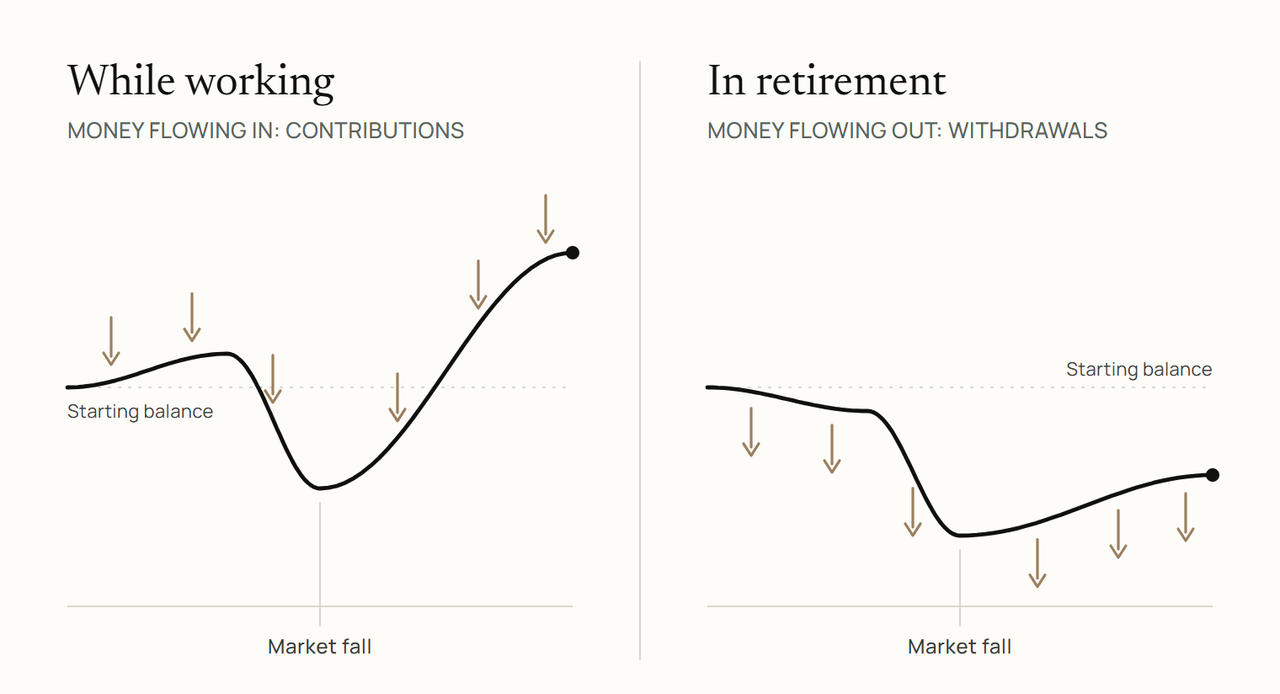
- While working: contributions go in and nothing comes out. After a fall there is time to recover, and new contributions buy in at lower prices.
- In retirement: contributions stop and regular withdrawals begin. After a fall, withdrawals continue, so assets are sold at lower prices.
Five risks to plan for
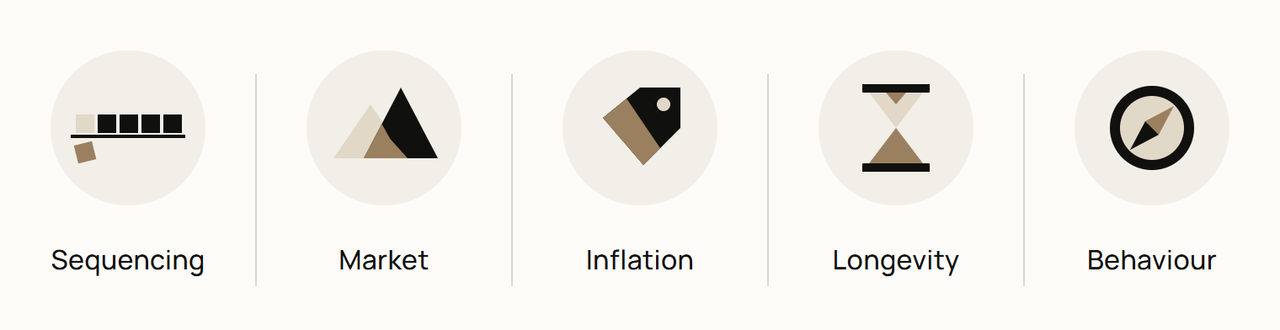
- Sequencing: losses in the first years of retirement, while withdrawals are being made, can permanently reduce what your savings can provide.
- Market: the value of investments rises and falls with markets.
- Inflation: rising prices reduce what your income buys over time.
- Longevity: your savings may need to last longer than you expect. Life expectancy is an average, and many people live beyond it.
- Behaviour: under stress, investors tend to act at the wrong time, such as selling after a fall.
What our advisers heard in Hobart
At the PGW National Conference 2026 in Hobart, Craig Racine of Gyrostat Capital Management spoke to our advisers about retirement portfolios. He highlighted two of these risks: the order in which returns arrive, and how investors behave when markets fall. PGW Financial Services is the licensee our private wealth advisers work under.
Same returns, different retirement
Two people retire with $800,000 and each withdraw $45,000 at the start of every year. Over ten years both earn the same returns: nine years at 7% and one year at −20%. The only difference is when the bad year arrives.
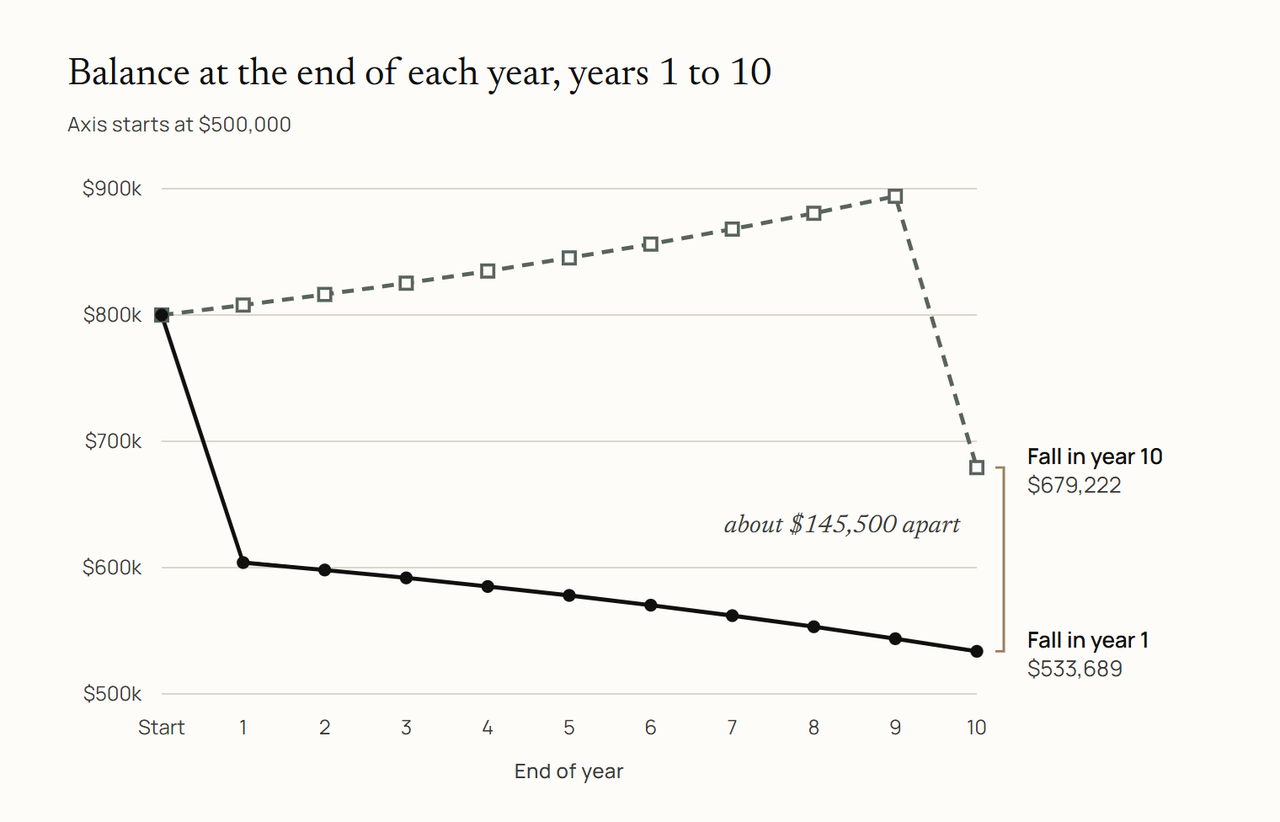
After ten years, the retiree whose fall came first has $533,689 and the one whose fall came last has $679,222. Same average return, same withdrawals, and about $145,500 apart. The early fall hit a larger balance while withdrawals continued, so less was left to benefit from the good years that followed.
Why behaviour matters as much as the maths
As you move into retirement, your capacity to absorb losses falls, and your fear of losses tends to rise. That is when investors are most likely to sell after a fall, which turns a temporary loss into a permanent one.
A retirement plan is built in advance for both: the maths of withdrawals, and what you will do when markets fall.
“We encourage clients to see retirement as a series of phases, not a single date. Each phase has to hold up through a sharp market fall, while staying invested enough to benefit when markets recover.” Luke Aitken, Senior Private Wealth Adviser
Five assumptions worth testing
- “Retirement is one date, and the plan is set.” Retirement runs in phases. Plan the first years in detail, and expect the plan to change as your circumstances and priorities do.
- “The average return is what counts.” Once you are drawing an income, the order of returns matters as much as the average.
- “I’ll move everything to cash when I retire, to be safe.” Cash reduces market risk, but it can increase inflation and longevity risk over a retirement that may run 25 years or more.
- “My savings only need to last to my life expectancy.” Life expectancy is an average. A plan built only to that age can run short for anyone who lives longer.
- “I won’t panic in a downturn.” Most people find a fall harder to sit through once they have stopped earning and started drawing down.
Questions to ask about your own plan
- If markets fell 20% in your first year of retirement, how would you fund the next two or three years of income without selling at the bottom?
- What age is your plan built to last to?
- Does your retirement income keep pace with rising prices?
- Have you decided in advance what you will do, and not do, the next time markets fall?
If any of these are hard to answer, it is better to work through them before you retire than after. Our private wealth advisers can take you through how they apply to your own circumstances.
About the author

Luke Aitken
Senior Private Wealth Adviser
Wealth creation and retirement advice for individuals, families and business owners as their circumstances change.
Originally published
Continue the thought
Wealth & family · 24 September 2026 · Johnny Shin · 4 min read
Who we introduce, what we remember
As AI makes good advice work quicker and more consistent, the difference lies in the thought behind it: who we introduce, what we remember, when we follow up.
Wealth & family · 5 May 2026 · Johnny Shin · 4 min read
The AI that matters most
Polished content is becoming easy to produce. The advantage in advice will come from judgement, context and trust, and from using AI to become more human, not less.
Wealth & family · 22 September 2025 · 1 min read
Is a family trust right for you?
A trust separates control of assets from their ownership. For some families that brings flexibility and a smoother transfer between generations; for others, cost and complexity without benefit.